Six areas I’m learning more about in 2026
I am not one for New Year’s resolutions, but at this time of year, particularly as we approach the festival of Imbolc, I do find myself pausing to reflect. What are my intentions for the coming year? What do I want to accomplish? In what ways do I want to grow? What do I want to share, and what do I want to learn more about?
As many of you will know, last year I relocated to the north-west of Ireland and am now making my home here in County Leitrim. It is a beautiful part of the country, and I am slowly, steadily, beginning to connect with this new place. Over the past months I have been consciously working with the Spiritual Rewilding pathways and approaches, something I have written about before. This work and practice is cyclical and iterative, and when moving to a new place it feels important to listen first, to let the land speak, and to allow myself to be changed by that ongoing conversation.
Relationship with land, with place, takes time, attention, and a willingness to be shaped by what you encounter.
As I continue to connect with the local landscape, I am becoming aware of many areas that I feel curious to learn more about. These are not separate from that process of settling in, but part of it - each one adding a part of the story of this area. As I explore them further, I will share more of what I am learning along the way. Here are six areas I am particularly drawn to explore this year.
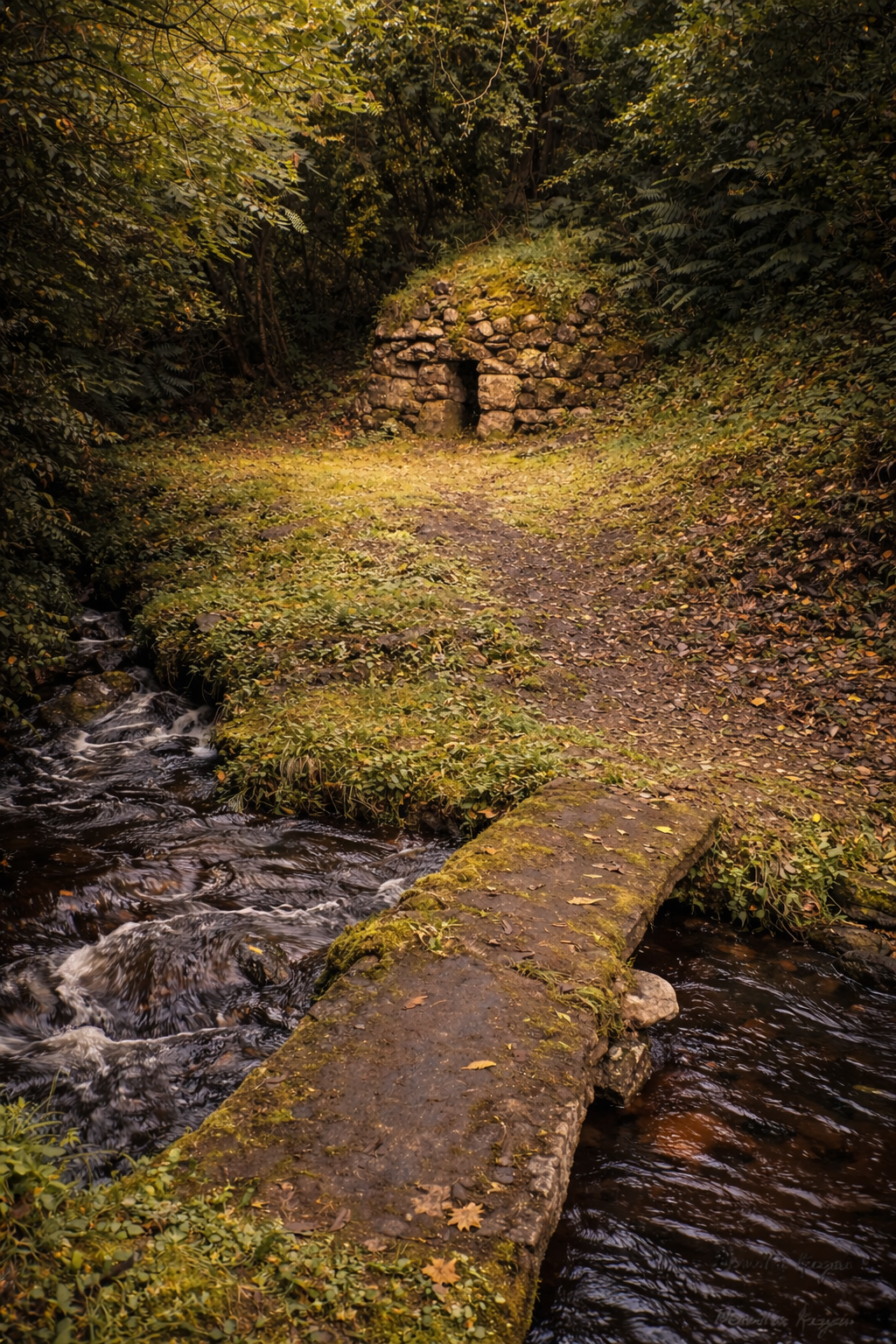
St Hugh’s Sweathouse, Leitrim
Sweathouses
Many years ago, I apprenticed in holding Celtic sweat lodge - working with cycles of sweat lodge ceremonies aligned with the festivals of the wheel of the year, and rooted in the songs, stories, and magic of these Isles - and poured these lodges around the UK. That ceremonial work was extremely profound for me and shaped my spiritual path in deep and lasting ways.
It feels remarkable now to find myself living in the heart of Irish sweathouse country. Though Irish sweathouses are not equivalent to the sweat lodge traditions I trained in, and I do not approach them as the same thing, there is something powerful about knowing that ceremonial and folk traditions of heat, sweating, and healing have long existed here too, embedded in this landscape.
The north west of Ireland, particularly Connacht, holds a high concentration of sweathouses, often hidden at the edges of streams or tucked into hillsides. Leitrim itself is home to a significant number, with the largest cluster found around Lough Allen. Many are easy to miss unless you know what you are looking for.
My intention this year is to learn more about these sweathouses. To visit sites where appropriate, to understand their history and cultural context, and to learn from the careful research already undertaken, particularly through the work of the Leitrim Sweathouse Project. Given how important sweat ceremonies has been to my own spiritual journey, and how close these structures are to where I now live, this feels like a thread of learning I am genuinely excited to follow.
Holy wells
Holy wells have always held a sacred place in human history, long before any single religious framework claimed them. In Ireland, that continuity feels especially tangible, with signposts to “an tobar” everywhere you go. Practices around wells have been preserved from pre Christian times right through Christian periods by local communities, woven into various folk traditions and lore.
There are many holy wells scattered across Leitrim, some still tended and visited, others half hidden in hedges or fields, remembered only by name. What draws me here is not so much the research, although that matters, but the embodied encounter with these wells and springs. Spiritual Rewilding is not primarily about what we can find in books. It is about going there. Walking to the wells. Hearing the water. Touching the stone. Where it feels appropriate and safe, drinking from those waters.
I want to learn how these wells are held today, which are still visited, which have fallen quiet, and what kinds of relationships continue to exist around them. To follow in the footsteps of the many generations of people who have held these places sacred, to listen to the waters, and to allow that relationship to develop slowly over time.
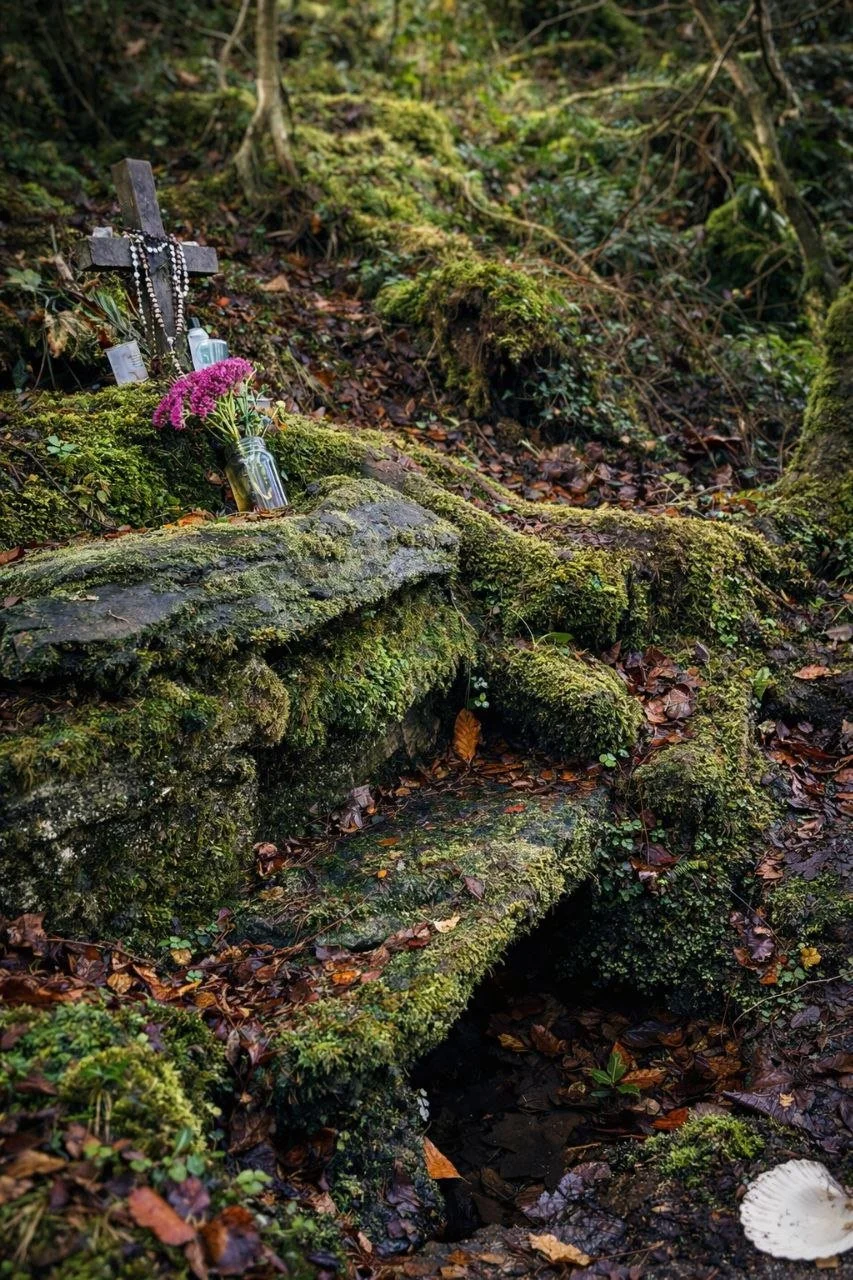
Ague Well, Donegal
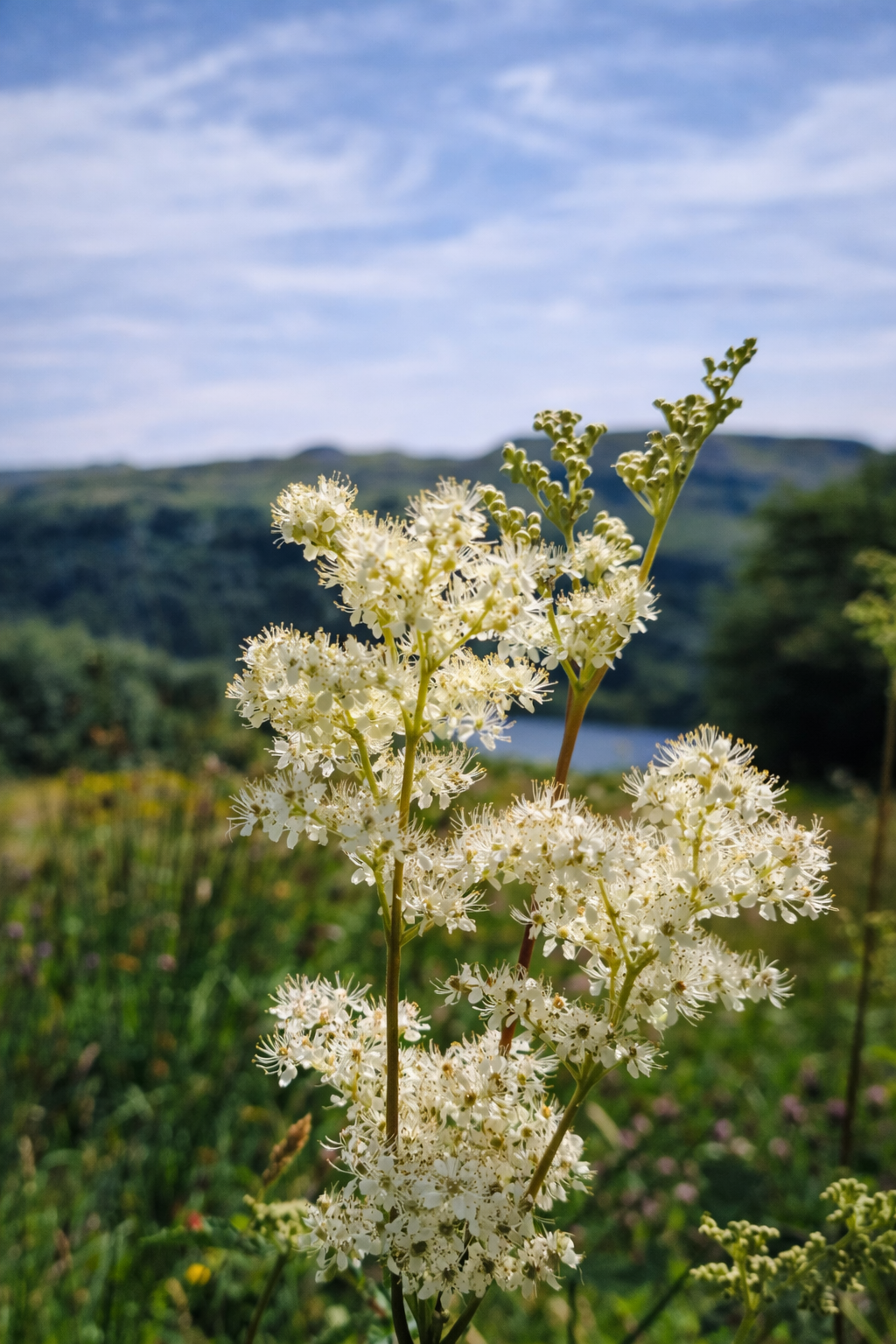
Meadowsweet near Glencar Lough
Local magical plants
In the UK I had a long standing relationship with Mugwort. It was a long-time teacher plant of mine, grew everywhere around me and became part of my annual spiritual practice. Each year I would make offerings to the plants, gather them, dry them, and work with them in ceremony, ritual, and craft.
Since being here, and even in the years I have been visiting this part of Ireland, I have not seen Mugwort growing at all, and I am feeling a strong sense of loss because of this. Plant relationships are deeply place specific, and so moving land means leaving behind familiar allies.
And at the same time, I am now curious. What grows here instead? What plants thrive in this boggy soil, heavy rain, and tight wind? What local healing or magical plants are present, waiting to be met. I want to learn the plants of this place slowly, through walking, offering, seasonal observation, and respectful relationship. Last summer, I noticed meadowsweet growing profusely all around my home, so that may well be a starting point.
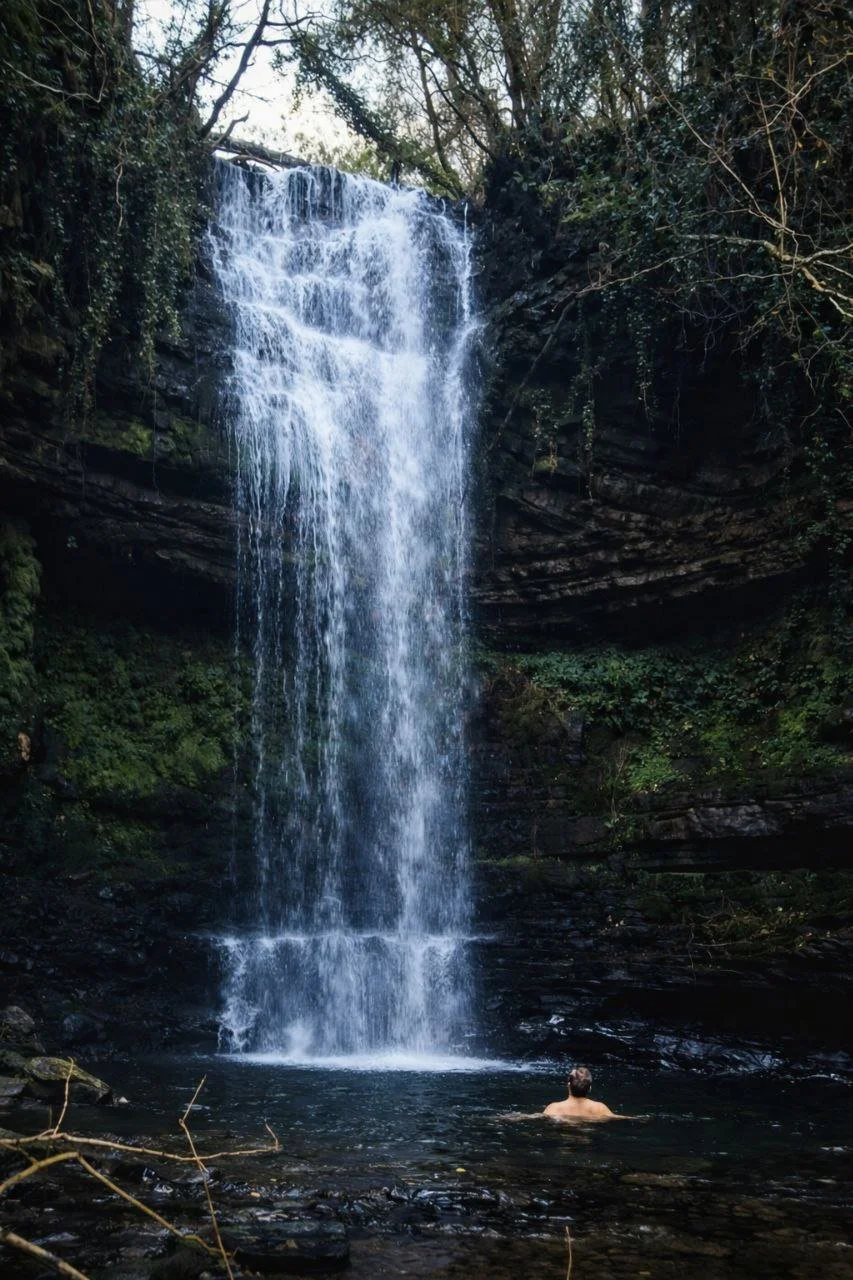
Bathing in Glencar waterfall
The wider waterscape
Leitrim is shaped by water. Beyond the holy wells, water here is everywhere, moving through the land and through local stories and folklore. There are over forty lakes within Leitrim, along with rivers, streams, pools, bogs, and wetlands, all with their own stories, shaping how this place feels, moves, and breathes.
In December, I took part in the Dip-a-Day Challenge in support of the local mental health charity North-West STOP. Each day involved a cold water dip, and I used that as an opportunity to go and meet a range of different wild lakes and pools close to where I live. I am very grateful for the support people offered during that time, both practically and through donations, and together we raised a good amount for the charity over the month.
What that daily practice gave me, beyond the challenge itself, was a chance to encounter these waters one by one, meeting different locations, different shorelines, different qualities of water. Even over a short period, it became clear that each place has its own mood, its own temperament, its own way of receiving you. There were a few places in particular where being in the water felt unexpectedly profound.
I plan to continue cold water and wild swimming through this year, and in doing so to spend more time getting to know the wider waterscape here. As I get used to being in the water for longer, and as the water itself slowly warms, I hope I will be able to listen more closely to what these places have to share.
There has already been a lot written about wild swimming as spiritual practice, and until recently I would have described myself as a fair-weather wild swimmer at best. Pushing myself to be in cold water through the winter has opened the possibility of meeting these waters across the full cycle of the year, rather than only at its warmest points.
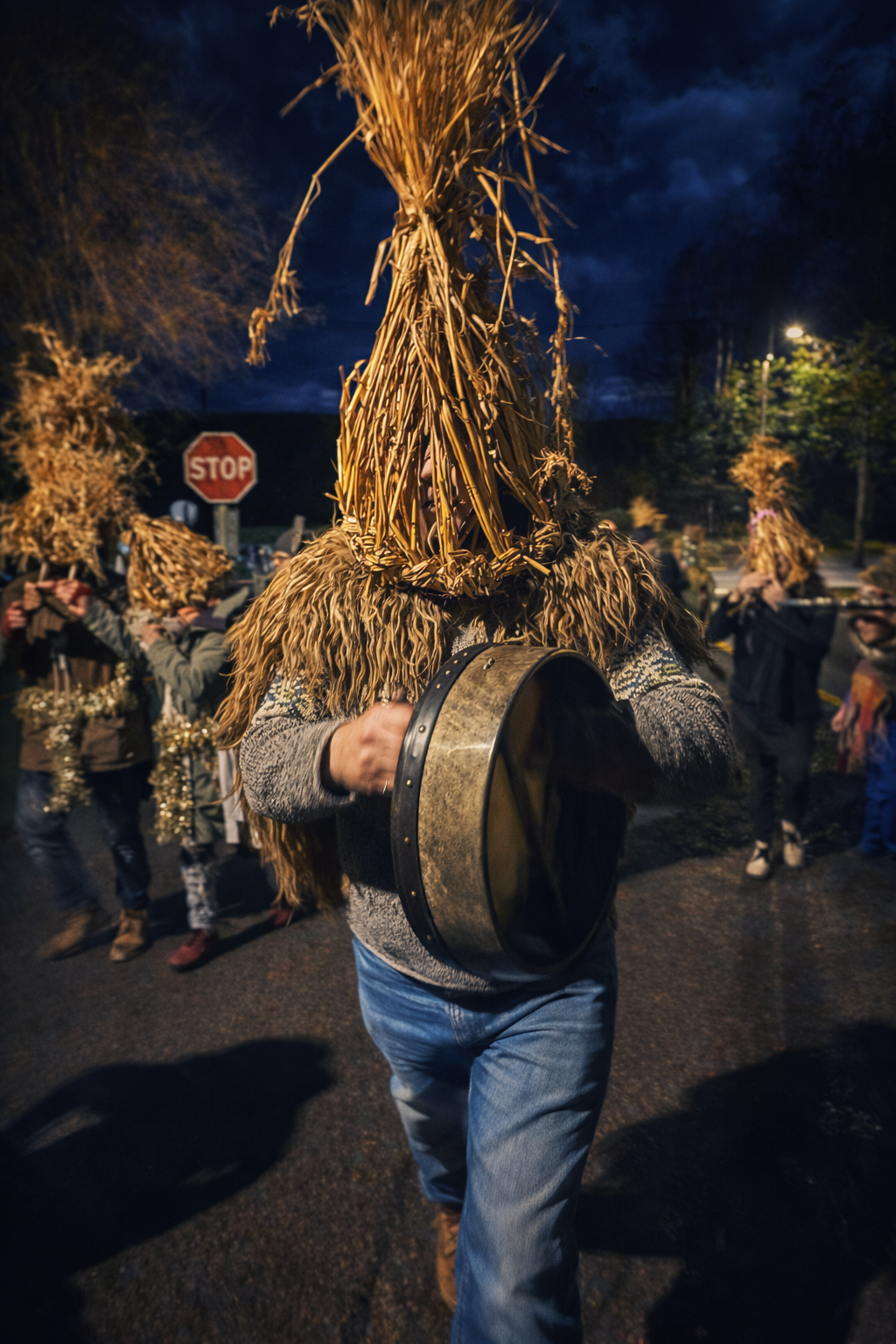
Joining the Mummers’ Parade
Seasonal folk traditions
I come from a part of England where there has been a strong revival of folk traditions. Wassails, Jack in the Green, harvest festivals, and locally supported seasonal celebrations were part of the rhythm of life.
While it has been sad to leave that behind, it has been a joy to discover that folk traditions are very much alive here in Leitrim. In many ways, the county is leading a contemporary folk revival in Ireland, with music, dance, and seasonal customs very much woven into community life.
Over the Christmas period I joined the local Mummers’ parade, crafting straw masks, making music, and moving through the towns over the twelve days of Christmas. I am looking forward to connecting more deeply with these seasonal traditions as they are lived here, learning how the year is marked, celebrated, and embodied in this place and community.
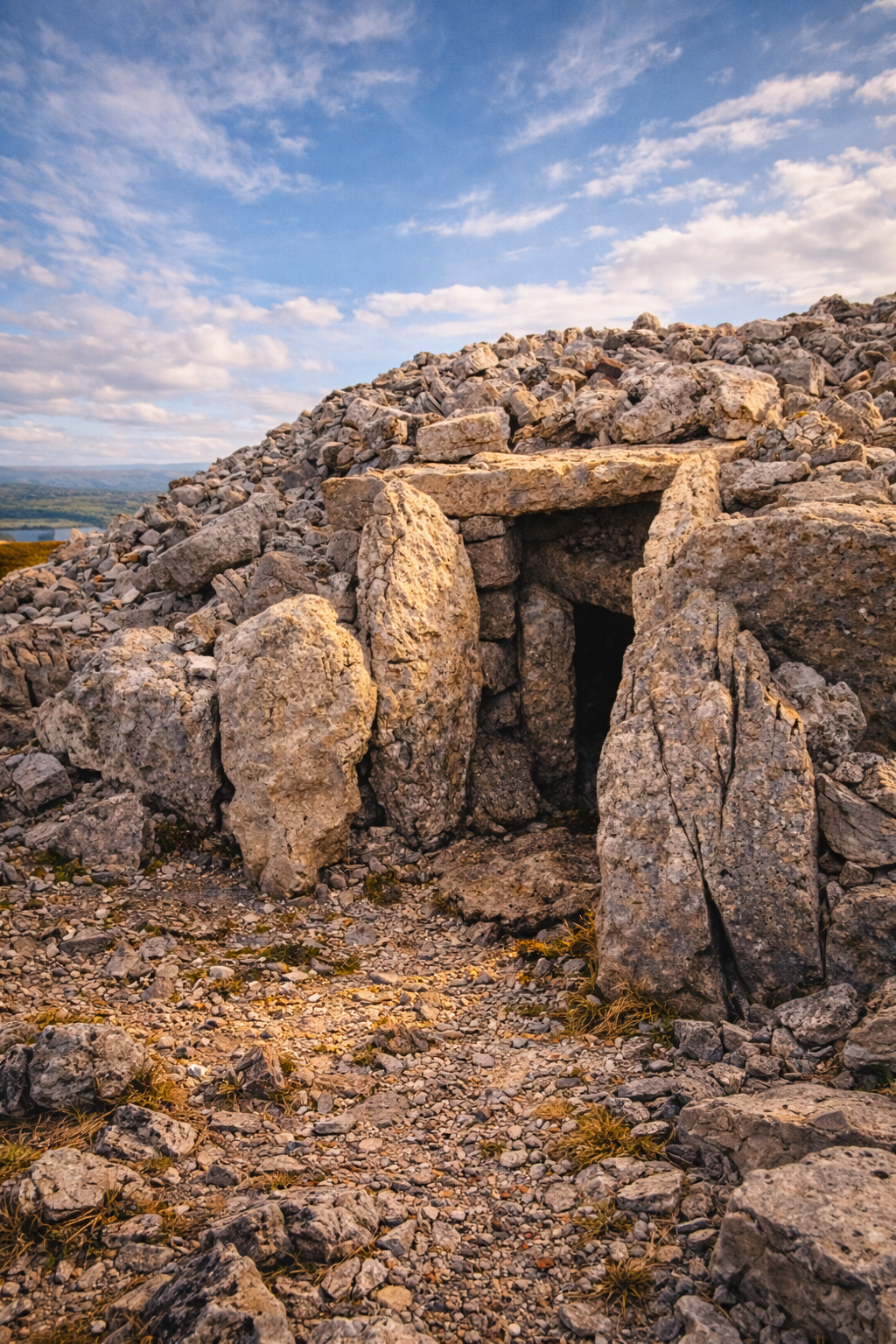
Carrowkeel Passage Tomb
Wild stories and the wider sacred landscape
As I continue to walk and get to know the land, I want to apply the Spiritual Rewilding ethos to this landscape and the places I meet. Getting to know places through connecting with their rhythms and energies, meeting the spirits of place, and learning the wild stories that live here.
As I emphasise on the Spiritual Rewilding course, this kind of knowing does not come through research alone. It comes through encounter and being with place. Through repeated walking, sitting, listening, and allowing relationship to form over time. Alongside learning stories that are held in folklore or local memory, I am interested in inviting the land to share itself with me slowly.
A year of listening
These are six areas I feel drawn to explore more deeply this year. They reflect what feels alive and close at hand, and the ways I am looking to deepen my relationship with this place.
I will share more along the way, both here on the website and through my Instagram and Facebook pages, as these threads develop and take shape. If there are particular aspects of this that you would be interested to hear more about, do let me know.
And if you are reading this, I would genuinely love to hear what you are listening for where you are. What are you hoping to learn more about from your local landscape in 2026?